Small Cryptocurrencies Face Uphill Battle in US 401(k) Plans Under New Labor Department Rule
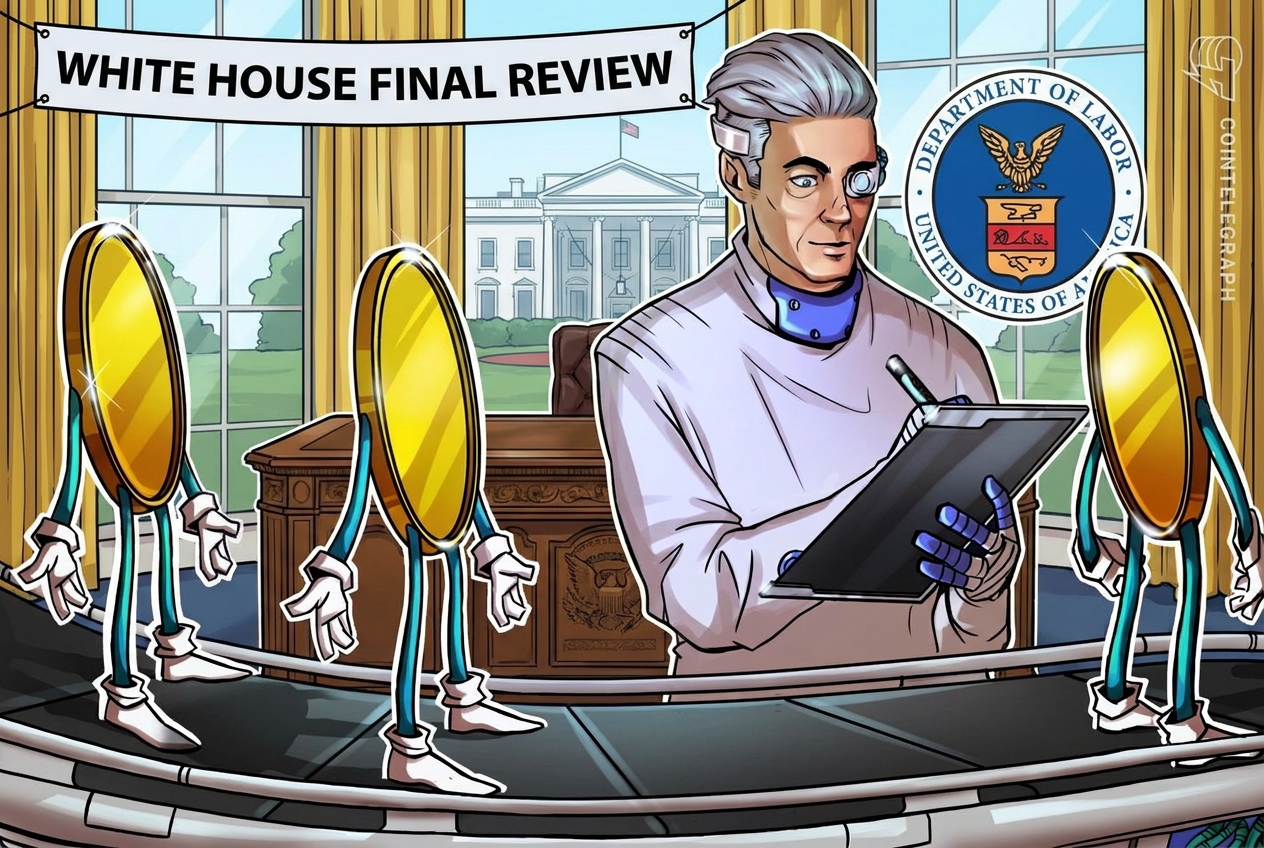
Small cryptocurrencies might become eligible for inclusion in US 401(k) retirement plans according to a proposed regulation from the Department of Labor. However, experts caution that these smaller tokens will likely encounter greater obstacles compared to Bitcoin (BTC) and Ether (ETH).
On Thursday, the rule was submitted to the White House for final review, as reported by the Office of Information and Regulatory Affairs. The proposal aims to simplify the process for retirement plans to offer alternative investments like cryptocurrencies while providing enhanced legal protections for employers and plan fiduciaries.
The March proposal from the Department of Labor does not specify which digital assets qualify nor does it impose a minimum market capitalization threshold. Instead, it directs plan managers to evaluate investments based on six criteria: returns, fees, liquidity, valuation, benchmarks, and complexity.
While the rule could pave the way for a broader range of cryptocurrencies in retirement portfolios, inclusion is not guaranteed. Experts point out that smaller tokens might struggle due to limited track records, liquidity constraints, and other inherent risks.
Teresa Goody Guillén, managing partner at Bellementis PLLC, predicts Bitcoin and Ether will be the initial cryptocurrencies offered, owing to their established markets and investment products. Bitcoin and Ether hold the top two positions by market cap, valued at about $1.5 trillion and $273 billion respectively as of November 6, according to CoinGecko.
Nonetheless, Guillén emphasized that altcoins are not automatically excluded. Instead, fiduciaries overseeing 401(k) plans must demonstrate that their investment choices are prudent.
"The key consideration isn’t which digital assets regulators approve, but whether the investment aligns with the same standards of prudence, liquidity, valuation, and investor protections applied to any retirement option," Guillén explained.
She further noted that while market capitalization is a factor, it should not be the sole determinant. "Being large doesn’t equate to suitability, and being small doesn’t mean disqualification. Digital assets should neither receive special treatment nor be excluded simply because they utilize different technologies," she added.
Bernardo Brites, co-founder and CEO of Trace Finance, agreed with Guillén’s viewpoint, stating, "If you evaluate any token against these criteria, Bitcoin easily passes, Ether fits as well, but others often fail due to lack of track record or benchmarks before market cap even comes into consideration."
Brites clarified that in this context, market capitalization only plays an indirect role. "A practical test is whether a plan committee can source a reliable daily price from a regulated entity. If not, the asset is not eligible," he said.
Although the Department of Labor’s proposal does not confine crypto investments solely to exchange-traded funds (ETFs) or managed funds, specialists believe these investment vehicles will likely precede direct crypto ownership in retirement plans.
"ETFs and managed funds are expected to be introduced first because they seamlessly fit into current custody and record-keeping frameworks," Guillén explained. In contrast, direct cryptocurrency holdings prompt additional concerns around storage, cybersecurity, and valuation. Still, she emphasized that such challenges should not automatically preclude direct crypto investments.
Brites also anticipates a gradual rollout of crypto options. Existing brokerage offerings would emerge initially, followed by standalone ETFs and funds holding modest cryptocurrency allocations.
He projects some crypto investment options will appear by 2027, with ETFs becoming accessible to larger employers later that year. By 2028, cryptocurrencies might be broadly available within retirement funds.
"The rule reduces legal risks but does not change operational processes, which tend to move more slowly," Brites noted. "The White House review can take up to ninety days, followed by publication and an effective date often sixty days later."
Legal ambiguities also remain a barrier to wider adoption. While the proposal offers fiduciaries some protection against lawsuits, it does not eliminate the possibility of legal challenges stemming from their investment decisions.
Brites cautioned that future administrations could revoke the rule, potentially dissuading employers from incorporating cryptocurrencies into long-term retirement plans.
"The 2022 guidance was rescinded in 2025; fiduciaries drafting ten-year plan designs must consider that this rule could also be undone," he said. "Moreover, as courts increasingly show less deference to agencies, the relevance of safe harbor protections in litigation remains uncertain."
The proposed rule’s significance lies in its potential to broaden cryptocurrency access within retirement savings vehicles, contingent on fiduciaries navigating regulatory standards and legal uncertainties while balancing innovation with investor protections.
This development reflects a pivotal moment for the crypto ecosystem’s integration into traditional retirement planning, highlighting the critical balance between facilitating innovation and maintaining rigorous scrutiny to safeguard long-term investor interests.
By outlining evaluation criteria for digital assets and lowering some legal risks for plan managers, the rule could encourage gradual inclusion of cryptocurrencies—starting with major assets like Bitcoin and Ether—into 401(k) plans, marking a cautious yet significant shift in retirement investment options.
Small cryptocurrencies face formidable challenges due to liquidity, valuation, and regulatory scrutiny, underscoring that market size alone does not guarantee inclusion. Ultimately, adoption depends on demonstrating prudence and compliance rather than token popularity, shaping the future of crypto in retirement portfolios.
Why it matters
The proposed Labor Department rule represents a meaningful step toward integrating cryptocurrencies into US retirement plans, potentially broadening investment options for savers while raising important considerations over fiduciary responsibility, legal risk, and asset suitability that will determine the pace and extent of crypto adoption in 401(k) portfolios.
Prepared from the source material with AI-assisted editing and checked against the supplied facts.
Open original source ↗