Crypto Tokens Linked to Trump Drop Amid Democratic Midterm Wins
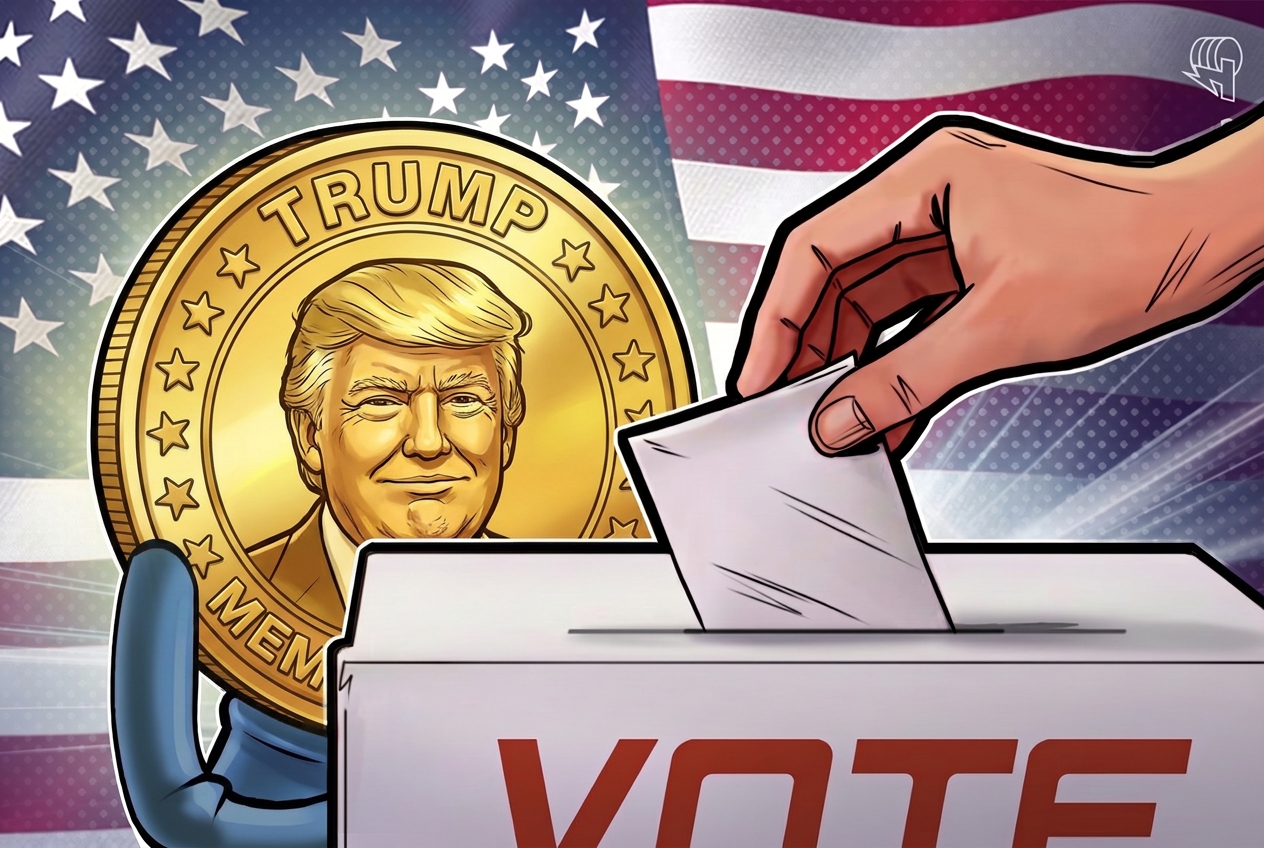
Two cryptocurrency tokens associated with US President Donald Trump led the biggest losses among the top 100 digital assets on Wednesday after the US midterm elections, sparking concerns about their future despite a generally rising crypto market.
The official Trump token (TRUMP) experienced a 17% decline within 24 hours, reaching $1.33, while World Liberty Financial (WLFI) dropped over 7% to $0.047, based on CoinMarketCap data at 17:32 UTC. TRUMP is the president’s official memecoin, launched in January 2025, whereas WLFI serves as the governance token for World Liberty Financial, a family-backed decentralized finance (DeFi) project launched in 2024.
These declines followed a wave of Democratic victories in Tuesday’s midterm elections, including unexpected successes in Texas, resulting in the Democrats regaining control of both the House of Representatives and the Senate from the Republicans.
The election results may not only hinder Trump’s ability to advance his cryptocurrency initiatives but could also lead to increased regulatory scrutiny over his family’s crypto operations. Analysts note that the price drops highlight uncertainties about whether political affiliation alone can sustain demand for Trump-linked tokens.
Bitcoin (BTC) and Ether (ETH) bucked the trend, with Bitcoin rising over 4% to around $80,500 and Ether climbing 6% to $2,433, according to CoinMarketCap. Other major cryptocurrencies also gained: Binance Coin (BNB) increased by 3%, XRP by 2.6%, and Solana (SOL) by 2.5%. Overall, the crypto market capitalization grew by 3.4% to $2.69 trillion.
Losses also affected tokens connected to the Trump family, such as the MELANIA memecoin linked to former First Lady Melania Trump, which fell nearly 13% to about $0.066. A token named after Vice President JD Vance (VANCE) also declined almost 12%, although no official connection to the vice president has been confirmed.
The broader political memecoin sector was hit as well, with its total market capitalization dropping more than 16% in one day to $477 million. Meanwhile, trading volume surged 123%, reaching $437 million, according to CoinMarketCap.
Benjamin Sarquis Peillard, founder and CEO of Cap, a DeFi platform specializing in stablecoin yields, explained that investors seem to treat politically affiliated tokens differently from mainstream cryptocurrencies.
He pointed out, “Bitcoin and established assets respond to factors like liquidity, institutional investment, and macroeconomic trends, while politically linked tokens are more sensitive to shifts in the political landscape in Washington. Even amid a market recovery, these tokens may face selling pressure if investors reassess their risk.”
While the selloff might represent a short-term reaction to the election outcomes, Peillard emphasized a longer-term issue: what factors will sustain demand for these tokens beyond their political associations.
The midterm election results also bring uncertainty to the future of US crypto regulations, including the stalled Digital Asset Market Clarity Act (CLARITY Act).
This bill, aiming to set a regulatory framework for digital assets, failed to advance earlier this year after not securing the 60 votes needed in the Senate. Democrats pushed for stricter ethical standards and safeguards against conflicts of interest involving Trump’s crypto ventures, though four Republicans opposed advancing the legislation as well.
Peillard noted, “The midterm outcomes add a new layer of regulatory uncertainty, especially regarding the speed and direction of digital asset laws. This uncertainty impacts politically linked tokens directly because investor sentiment heavily depends on political expectations.”
Although the crypto industry continues to experience both support and opposition from lawmakers across parties, the precise effects of the election results on crypto legislation remain unclear.
He concluded that for the broader crypto sector, the critical question is whether Congress can establish a stable regulatory framework that provides clarity regardless of which party is in power.
Why the future of politically connected crypto tokens is uncertain amid shifting elections and evolving regulatory landscapes. These developments highlight the challenges of relying solely on political ties to maintain token value and underscore the broader need for clear, consistent legislation in digital assets.
The contrasting performance between political tokens and major cryptocurrencies, alongside stalled regulatory efforts, reveals a complex intersection of politics, market sentiment, and governance impacting the crypto industry's trajectory.
Analyzing investor behavior and legislative gridlock offers insight into the sustainability of political tokens and the overall direction of the US crypto market.
Understanding these dynamics is key to anticipating how political events and legal frameworks will shape the digital asset space going forward.
The importance of distinguishing between temporary market reactions and long-term fundamental demand for politically linked tokens becomes apparent in this context.
Why it matters
The response of Trump-related tokens to the US midterm elections spotlights the fragility of using political association as a basis for market demand, emphasizing the significance of regulatory clarity and investor confidence in the evolving crypto landscape.
Prepared from the source material with AI-assisted editing and checked against the supplied facts.
Open original source ↗