Moscow Exchange Set to Launch Russia's First Regulated Crypto Market
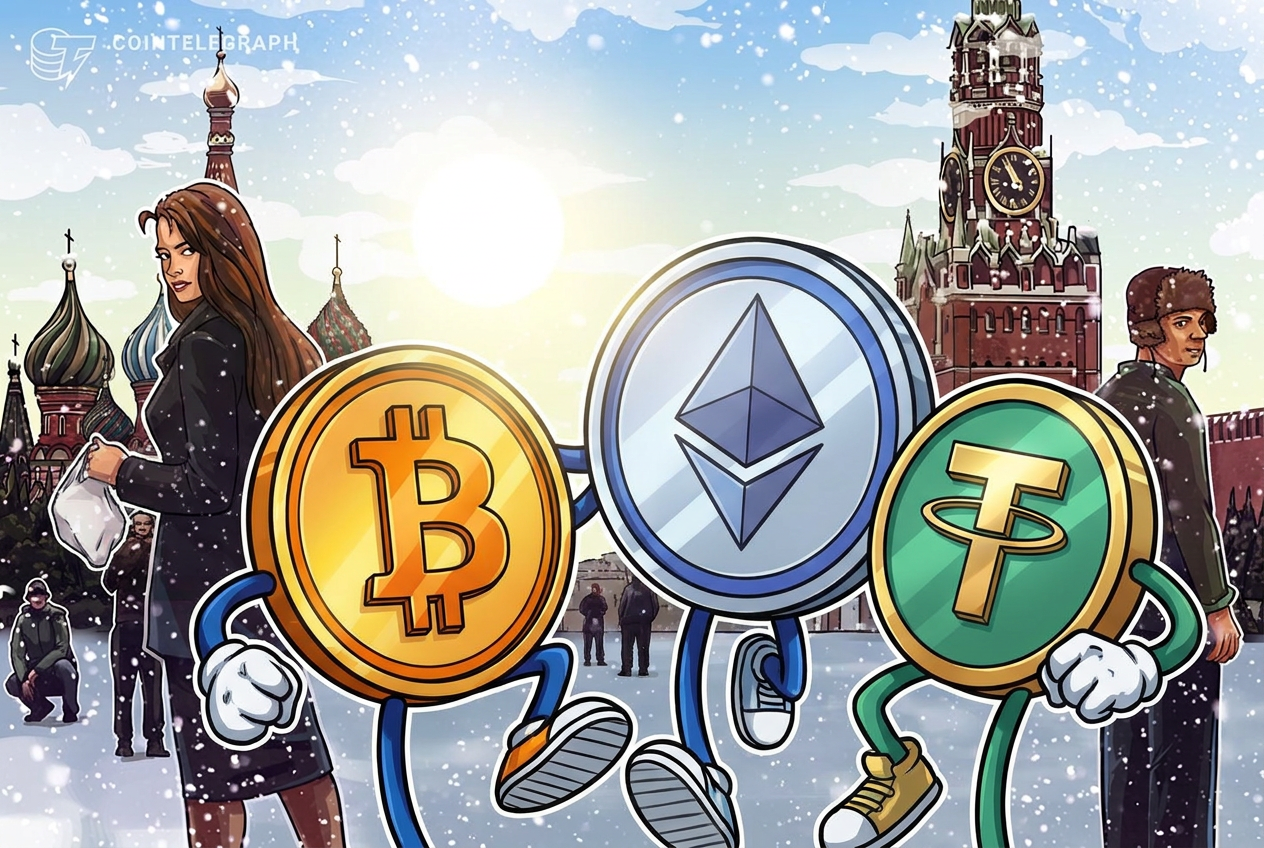
Moscow Exchange is preparing to inaugurate trading in Bitcoin, Ether, and Tether (USDT) starting December 1, establishing what it calls Russia's inaugural regulated digital currency marketplace.
The exchange announced on Monday that pilot trading will commence as new participants connect to the platform. Trading will utilize the existing stock market infrastructure and clear transactions via the National Clearing Center (NCC). Operating hours are scheduled from 6:50 a.m. to 11:50 p.m. Moscow time.
Initially, the platform will offer same-day and next-day settlements alongside swap transactions. Non-qualified investors will need to pass an assessment before purchasing cryptocurrencies and will have an annual purchase limit of 300,000 rubles (approximately $3,700) per broker, according to the exchange's statement.
This launch comes after Russia's cryptocurrency law took effect on September 1, which allows for regulated trading but continues to prohibit the use of cryptocurrencies for payments of goods and services within the country.
Both Moscow Exchange and the NCC have been subject to U.S. sanctions since June 2024. In the same year, the UK also imposed sanctions on the exchange, followed by the European Union adding it to its sanctions list in July 2026.
Is there demand for a sanctioned exchange? Sergey Mendeleev, founder of the Russian cross-border payments platform Exved, expressed skepticism to Cointelegraph about the potential demand for the proposed market.
Mendeleev stated, “Neither the global nor the local market will notice anything at all,” casting doubt on who would be willing to trade on an exchange under sanctions.
Notably, the UK imposed sanctions on Mendeleev himself on May 26.
He further predicted that trading conditions would be uncompetitive, likening the exchange's offering to Sberbank's precious metals accounts, where customers trade account balances without acquiring physical metals.
Mendeleev warned investors might encounter "absolutely outrageous spreads," referring to the gap between buying and selling prices. He described the proposition as entirely unattractive and unprofitable for average non-qualified investors.
Despite his reservations, Mendeleev acknowledged the platform might be valuable for facilitating cross-border payments, suggesting a marketplace where importers and exporters could exchange cryptocurrencies directly could find demand. However, he questioned whether adding another middleman could compete in a market where price negotiations occur over margins as slim as 0.05%.
He concluded with hope that the platform could represent a significant advancement for international trade.
Helen Partz contributed to the reporting.
Moscow Exchange's initiative marks the first organized crypto trading platform in Russia, potentially shaping the country's digital currency landscape despite regulatory and sanction-related challenges.
This development is significant as it attempts to integrate cryptocurrency trading within a regulated framework amid ongoing geopolitical restrictions, highlighting the complex balance between innovation and compliance.
Why it matters
The launch of Moscow Exchange's regulated crypto market is notable for pioneering organized digital asset trading under Russia's new crypto law, despite sanctions and skepticism about market demand.
Prepared from the source material with AI-assisted editing and checked against the supplied facts.
Open original source ↗