Blockchain Leaders Urge SEC to Define Digital Commodities as Non-Securities
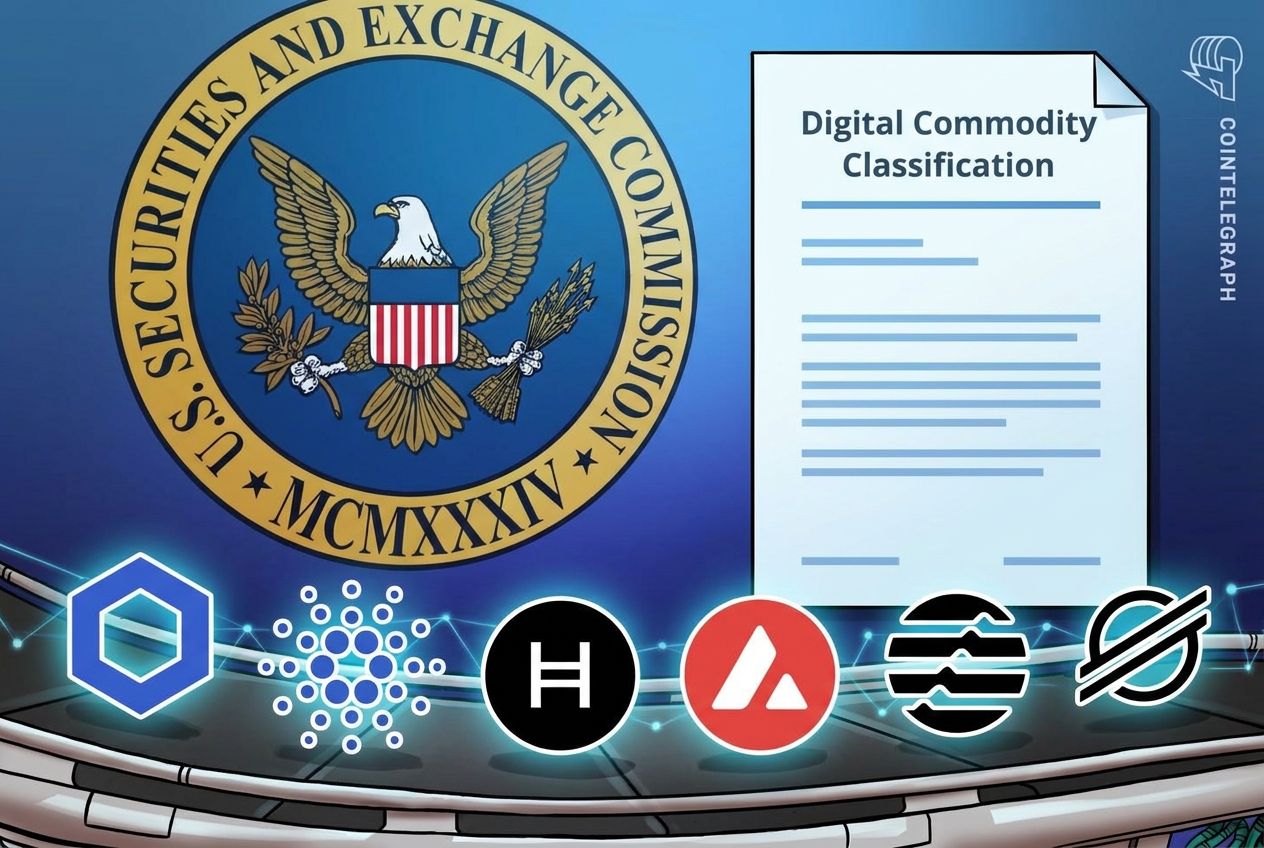
Six prominent blockchain organizations, among them Chainlink Labs and the Cardano Foundation, have appealed to the U.S. Securities and Exchange Commission (SEC) to officially classify digital commodities as non-securities. This request coincides with the conclusion of the SEC's public consultation period on its proposed cryptocurrency regulations.
In a joint letter dated October 20, Chainlink Labs, the Cardano Foundation, Hedera, Aptos Labs, Ava Labs, and the Stellar Development Foundation urged the SEC to embed the classification of digital commodities explicitly within the proposed regulatory framework for Crypto Assets. They emphasized that interpretive guidelines alone do not sufficiently address the legal ambiguities faced by market participants.
The coalition noted that while the SEC's current interpretation does recognize digital commodities as a separate category, the new proposed regulations fail to make this distinction clear. This lack of explicitness could cause uncertainty among developers and other market stakeholders regarding the securities laws that apply to them.
The letter further called for more detailed clarification on how securities laws would govern secondary market transactions involving digital assets. It also sought guidance on how activities such as staking and other interactions with decentralized blockchain networks should be treated under the law.
The SEC’s crypto regulatory framework proposal, introduced in August, received about 140 public comments over a 60-day period. These responses highlighted divergent opinions from industry participants and legal experts on aspects like exemptions for crypto offerings and a conditional safe harbor provision for certain tokens.
This development highlights the pressing need for regulatory clarity in the blockchain space to support the legal certainty necessary for industry growth and innovation.
Why it matters
Defining digital commodities clearly as non-securities is crucial to reducing legal uncertainties and enabling the blockchain industry to navigate compliance with confidence.
Prepared from the source material with AI-assisted editing and checked against the supplied facts.
Open original source ↗