HSBC and Ant Digital test AI-agent payments using tokenized deposits
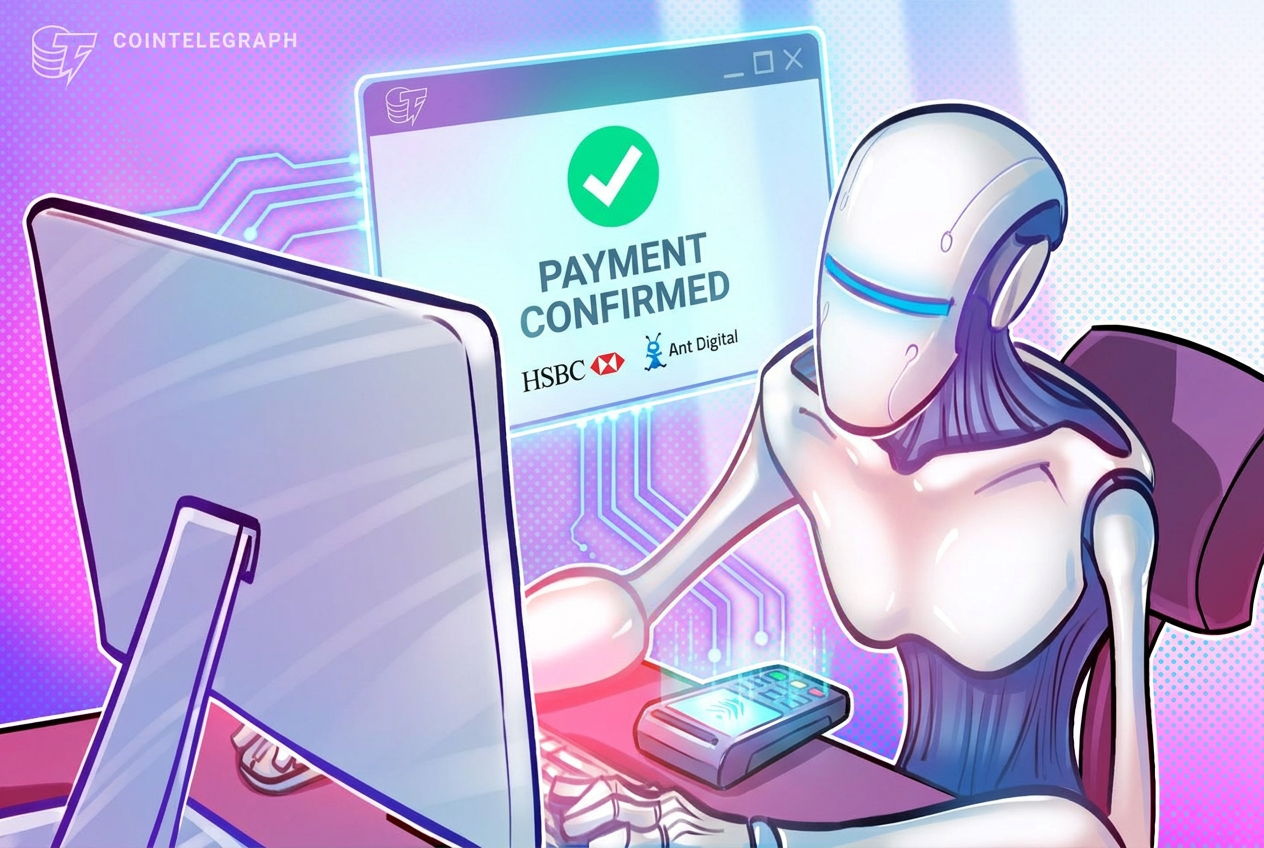
British banking giant HSBC and Ant Digital Technologies have tested a system enabling AI agents to access digital services and perform micropayments via tokenized bank deposits with real-time settlement on a blockchain testnet. This demonstration highlighted the integration potential between AI agents and programmable financial infrastructure using blockchain technology, though companies emphasized it was a technical verification without commercial rollout.
Technology and Testing Process
The test integrated HSBC’s Tokenised Deposit Service with Ant Digital’s Anvita Flow network, enabling AI agents to discover and use digital services. Transactions were settled in real-time on Jovay Testnet, a layer-2 blockchain testing environment that facilitates risk checks and payment settlement.
HSBC provided settlement capabilities and real-time risk assessments, while Ant Digital’s network coordinated access to services and payments. During the demonstration, an AI agent selected a digital service and completed a micropayment typically under $2.
The companies emphasized this exercise was purely a technical verification and did not represent a commercial launch or a live customer product.
Other Banks Experimenting with AI-Initiated Payments
HSBC is part of a broader wave of banks testing AI agents initiating transactions on behalf of customers.
In March, Spanish bank Santander completed an AI-agent-initiated payment via Mastercard’s Agent Pay infrastructure in a controlled test, integrating with the bank’s live payment systems.
In May, the Swiss digital asset bank Sygnum tested AI-agent-driven transactions on a blockchain mainnet, requiring customer approval and signature for each transaction. Spanish CaixaBank also conducted an AI-agent-initiated card transaction using Visa Intelligent Commerce coupled with existing merchant payment infrastructure.
However, some experts, like Augustus Bank CEO Ferdinand Dabitz, question whether established banks can adapt legacy infrastructures designed for human operations to handle fully automated, 24/7 AI-driven finance.
The Role of AI Agents in Driving Blockchain Adoption
Investment research firm Citrini Research explored blockchain’s potential role in AI-powered commerce in an October report titled "Breaking The Wall." The report argues autonomous AI agents could boost demand for programmable financial infrastructure.
The research suggests traditional financial systems, primarily designed for human users, may face challenges adapting as AI agents increasingly transact across diverse applications.
Citrini posits blockchain networks could provide the always-on, programmable infrastructure needed to move money and financial assets efficiently in alignment with AI operations.
The report quotes, “AI agents move programmatically, 24/7, across applications, and it’s only logical that money and financial assets eventually will, too.”
Why it matters
The HSBC and Ant Digital test demonstrates the technical feasibility of integrating AI agents with tokenized bank deposits to perform programmable micropayments. This marks a significant step in evolving financial systems towards enabling automated, real-time digital fund usage, opening new interaction paradigms between AI and financial infrastructure. Such initiatives could accelerate the transition to more flexible, programmable, and always-on banking environments, while fostering broader adoption of blockchain technologies within mainstream finance.
Prepared from the source material with AI-assisted editing and checked against the supplied facts.
Open original source ↗